What's the difference between epoxy and polyaspartic? The pro's guide to the right floor coating system
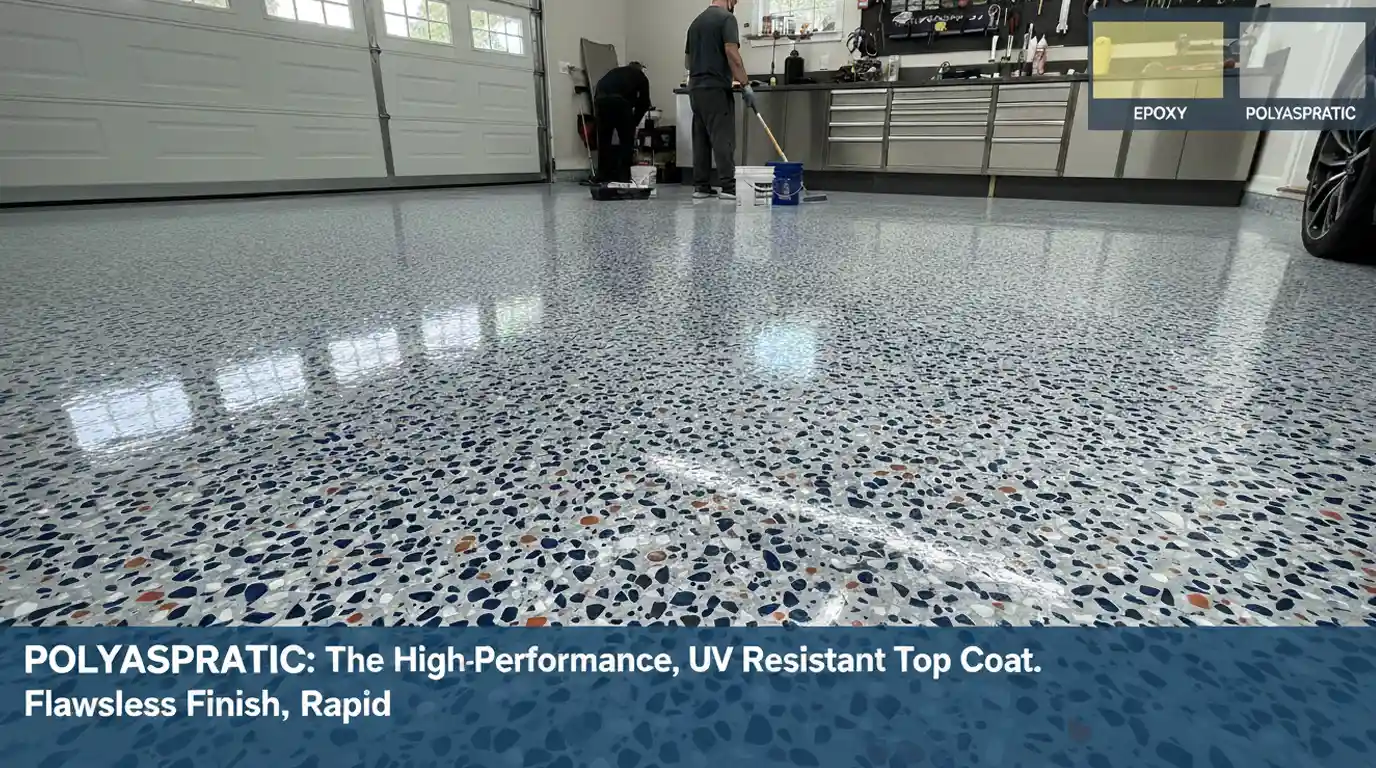
The primary difference isn't about which material is "better," but their distinct chemical roles in a high-performance system. Professionals use epoxy for its superb adhesion and thickness as a base coat, while polyaspartic coatings are used as a durable, UV-stable top coat. The best garage floor depends on the system, not a single product.
The Great Debate is a Distraction: Moving Beyond Epoxy vs. Polyaspartic
If you've spent any time researching a new garage floor coating, you've been bombarded with the "epoxy vs. polyaspartic" debate. Marketing claims shout about "one-day installation" and products that are "4x stronger than epoxy," creating a confusing landscape for homeowners and facility managers. Here’s the industry secret: this entire debate is misleading. It frames the decision as a simple choice between two competing materials, when in reality, professionals rarely think that way.
The success or failure of a high-performance floor coating doesn't depend on a single "best" material. It depends on designing a multi-layer system where each component is chosen for a specific purpose. Asking if polyaspartic is better than epoxy is like asking if a foundation is better than a roof. You need both to build a lasting structure. A properly designed floor coating system leverages the unique strengths of different materials to create a whole that is far greater than the sum of its parts. This system-based approach is what separates a floor that lasts for decades from a DIY project that results in peeling and delamination within a year.
Understanding the Core Materials: A Chemist's-Eye View
To appreciate why a system-based approach is superior, you first need to understand the materials themselves. Epoxies and polyaspartics are both thermosetting polymers, but their chemistry gives them vastly different performance characteristics.
Epoxy Coatings: The Workhorse Primer and Base Coat
Epoxy resin has been the go-to solution in industrial coatings for decades, and for good reason. When the two parts—a resin and a hardener—are mixed, they trigger a chemical reaction that creates a hard, rigid plastic surface with phenomenal adhesion. A 100% solids epoxy, which contains no water or solvents to evaporate, is particularly effective.
The primary strength of epoxy is its ability to bond tenaciously with properly prepared concrete. It wicks deep into the concrete's pores, creating a mechanical bond that is incredibly difficult to break. This makes it the ideal material for a primer and a base coat. Its relatively long pot life (the time you have to work with it before it starts to harden) is also a significant advantage. It gives installers ample time to apply the coating evenly, repair cracks with an epoxy mortar, and broadcast decorative flakes for a flake floor system. Furthermore, specialized epoxy formulations can act as a powerful moisture vapor barrier, a critical step for preventing failures on concrete slabs with underlying moisture issues.
Polyaspartic Coatings: The High-Performance Top Coat
Polyaspartic technology is a newer innovation, technically a type of polyurea (specifically, an aliphatic polyaspartic). Its development revolutionized the top coat layer of floor coatings. While epoxies form the unshakeable foundation, polyaspartics create the durable, beautiful, and resilient wear surface.
The single greatest advantage of a polyaspartic is its UV resistance. Unlike epoxy, which will inevitably amber or yellow with sun exposure, polyaspartics are color stable. Epoxies are never truly UV stable and will yellow over time, whereas polyaspartics offer good UV stability with low yellowing characteristics. This makes them the only logical choice for the final clear layer, especially in a garage with windows or for a patio coating.
Polyaspartics also cure extremely quickly, allowing for a much faster return to service time—often within 24 hours. They possess a higher degree of flexibility than epoxy, giving them superior impact resistance and abrasion resistance. However, this rapid curing is also its main disadvantage for the inexperienced. The short pot life can be a liability, leading to roller marks and other application errors. It requires a skilled, efficient professional installation team to achieve a flawless gloss finish or satin finish.
The Professional Framework: How We Choose the Right Coating System
At EZ Garage Solutions, we don't start by asking which product you want. We start with a thorough analysis of your specific needs and the condition of your concrete surface. This professional framework ensures the final flooring is perfectly suited to its environment.
Surface Preparation: The Foundation of Success
This is the most critical factor in the longevity of any floor coating. The debate between concrete grinding and acid etching isn't a debate at all among professionals. DIY epoxy kits from stores like Sherwin-Williams or Behr Concrete & Garage often include an acid solution to etch the surface. This method is inconsistent and only cleans the very top layer of the concrete, leaving weak, porous concrete behind. This is a primary cause of failures like hot tire pickup. Professional installation always involves mechanical preparation via diamond grinding or shot blasting. This process removes the weak top layer and opens the pores of the concrete, creating the ideal profile for the base coat to achieve maximum adhesion.
Moisture Levels in the Concrete
Concrete is like a sponge. Hydrostatic pressure can force moisture vapor up through the slab, creating a pressure that will lift a coating right off the floor, causing bubbles and peeling. We test for moisture vapor transmission before every project. If moisture is present, we apply a specialized moisture vapor barrier—typically a 100% solids epoxy primer—that can withstand this pressure and ensure the system's integrity.
UV Exposure
How much natural light does the area receive? For a standard garage where the door is often open, a basement floor coating near a window, or any outdoor patio coating, UV resistance is non-negotiable. This immediately dictates that the top coat must be a high-quality aliphatic polyaspartic to prevent yellowing and degradation over time. This ensures long-term color stability and gloss retention.
Application Environment
The application temperature and humidity can drastically affect how a coating cures. While polyaspartic coatings can often be applied in a wider range of temperatures than many epoxies, their extremely fast cure time in warmer weather demands an experienced hand. We carefully control the environment and use formulations appropriate for the conditions to ensure a perfect cure without imperfections.
Functional Demands:
Traffic and Chemical ResistanceHow will the floor be used? A residential garage floor needs to withstand vehicle traffic and occasional chemical spills from oil or gasoline. A commercial workshop floor or showroom floor faces much higher abrasion from foot traffic, carts, and equipment. A commercial kitchen requires a food-grade coating with high chemical resistance to harsh cleaners and sanitizers. The hardness, flexibility, and chemical makeup of the top coat are selected to meet these specific demands, often enhanced with anti-slip additives for safety.
The Installer's Secret: Why Hybrid Systems Outperform Single-Material Floors
This brings us to the core of modern, professional flooring solutions: the hybrid system. By combining materials, we create a synergistic floor that outperforms any single-product application. A typical high-end decorative flake floor system is a perfect example.
- The Primer/Base Coat: After grinding the concrete, we apply a 100% solids epoxy base coat. This layer penetrates the concrete, locks into the surface, and provides the immense bond strength the system needs. It’s the anchor for everything that comes after.
- The Chip Layer: While the epoxy is still wet, decorative flakes are broadcast to full rejection across the entire surface. These chips add color, texture, and depth, but they also increase the floor's thickness and impact resistance.
- The Top Coat: After the epoxy cures and excess flakes are scraped and vacuumed, the final protective layer is applied. This is almost always a clear, UV-stable polyaspartic coating. This layer locks in the flakes and provides the surface with its elite durability, chemical resistance, and scratch resistance. It’s the shield that takes all the daily abuse.
This hybrid approach is standard practice for high-quality installers. In fact, epoxy and polyurea are commonly used for tinted basecoats in chip flake systems, while polyaspartics are typically chosen for clear topcoats. This method delivers the best of all worlds: the unshakeable adhesion of epoxy and the superior durability and weather resistance of polyaspartic. Furthermore, for certain industrial coatings, the efficiency of this model is a significant advantage. Some studies have shown that polyaspartic coatings can be applied in a thicker coat than traditional systems, which may allow for a reduction from three coats to two, reducing painting cycle labor by 30%.
Context is King: Matching the System to the Space
The "best" floor coating is entirely dependent on the context of its use. The ideal system for a residential garage is different from that of a commercial kitchen or an outdoor space.
The Residential Garage Floor
For most homeowners, the hybrid epoxy base and polyaspartic top coat system offers the perfect balance of durability, aesthetics, and longevity. It provides robust protection against hot tire pickup, oil leaks, and dropped tools while ensuring the color and finish won't fade or yellow from sunlight when the garage door is open.
The Commercial Kitchen or Workshop Floor
In these high-stress environments, performance is paramount. Minimal downtime is critical, so the fast return to service time of a polyaspartic top coat is a major benefit. The system will be designed for maximum chemical resistance and abrasion resistance, often using a thicker build of materials and incorporating quartz or other aggregates for extreme durability and anti-slip properties.
The Outdoor Patio or Pool Deck
Here, UV stability and weather resistance are the top priorities. The coating must also have a high degree of flexibility to accommodate the expansion and contraction of concrete due to temperature changes. While a full polyaspartic system (primer and top coat) can be used, it requires absolute mastery of the material. A more common approach is to use a flexible epoxy or urethane primer designed for exterior use, followed by a robust polyaspartic top coat with a significant anti-slip additive.
Making the Right Choice for Your Needs
With this information, you can now make a decision based not on marketing hype, but on your specific goals, budget, and expectations for performance.
The 'Done-Right-Once' Homeowner
This individual values long-term performance and aesthetics over the lowest initial price. For you, the answer is clear: invest in a professionally installed hybrid system. The upfront cost is higher than a DIY kit, but it buys you professional-grade materials, critical surface preparation with concrete grinding, and expert installation. This is the path to a flawless, worry-free floor that adds significant value and functionality to your home for 15+ years.
The Budget-Conscious DIYer
If your primary concern is upfront cost and you're committed to doing the work yourself, a DIY epoxy kit is your most realistic option. Avoid polyaspartic kits, as their rapid cure time is unforgiving and often leads to poor results for first-timers. Choose a quality 100% solids or water-based epoxy kit and be absolutely meticulous about surface preparation. Understand the limitations: without mechanical grinding, the bond will be weaker, and without a polyaspartic top coat, the floor will likely yellow over time. Expect a shorter lifespan than a professional system.
The Commercial Facility Manager
Your decision is driven by ROI and operational efficiency. Downtime is a direct cost, making the fast-curing properties of a polyaspartic top coat system extremely valuable. Your focus should be on finding an installer who understands your specific industry's demands—be it for a food-grade coating, extreme chemical resistance, or high abrasion resistance for forklift traffic. The investment in a high-performance system pays for itself through longevity, safety, and minimized disruption to your operations.
Ultimately, the performance of your floor coating hinges on a professional assessment and a system designed for your specific environment. A bucket of epoxy or polyaspartic is just a material; expert installation and preparation turn it into a durable, long-lasting surface. At EZ Garage Solutions, we don't sell you a product; we design a flooring system tailored to your specific needs. For homeowners and businesses in the Jacksonville, FL area seeking a definitive solution, contact our team for a transparent consultation and a detailed quote.